
Armed Forces of the Philippines Helicopters Drop Bombs On Civilians
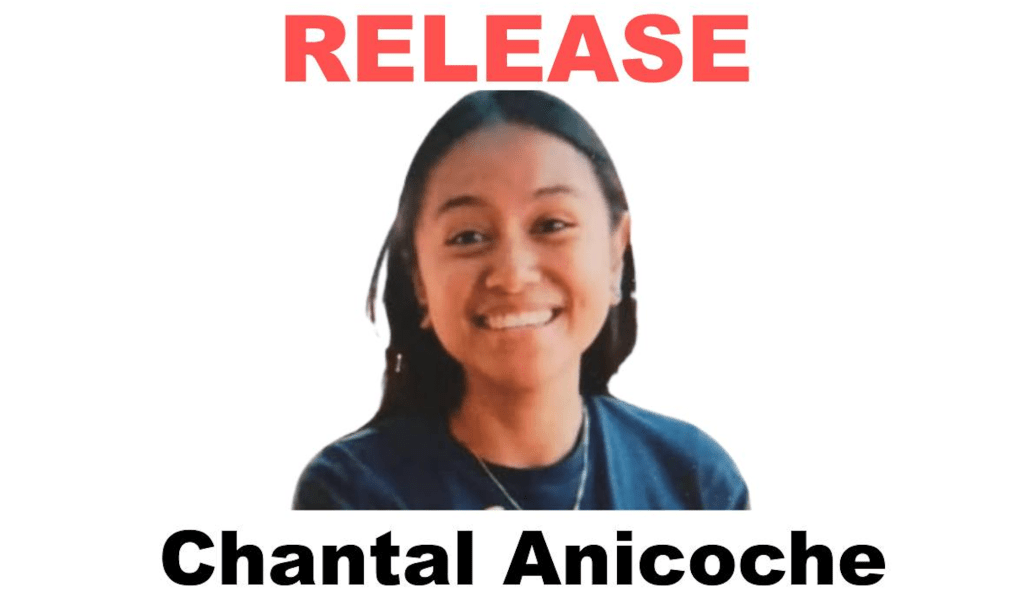
On January 1st, the Armed Forces of the Philippines conducted strikes in the province of Occidental Mindoro, allegedly against National People’s Army forces in the region. Three children were killed, along with two students, and 188 families were displaced from their homes; additionally, Chantal Anicoche, a Filipino-American student, disappeared at the time of the attack, and was later revealed to have been kidnapped by the AFP, and is, as of the time of this writing, being held in custody by the AFP without charges. The brunt of the attack was carried out by helicopters, dropping bombs on, and in the vicinity of, civilian communities.
According to both assertions made by the Communist Party of the Philippines, of which the NPA is the armed wing, and the direct admission of the AFP – the NPA did not have significant forces in the region; what NPA forces were present were observing a ceasefire for the holidays, and present to provide medical assistance to the indigenous Mangyan people of the region. Further, the Philippine supreme court has overturned a 25-year moratorium on mining and resource extraction operations in Occidental Mindoro, and the people of the region are faced with the return of Agusan Petroleum, as well as the construction of an enormous wind farm, both of which threaten displacement and further destitution for the peasants and indigenous peoples of the province. Abra de Ilog, the municipality where the strikes occurred, has been a significant site of struggle against these mining and energy conglomerates – and the removal of those who would resist such operations is a necessity for the capitalists who would exploit the region’s resources.
We will not speculate overmuch on the motivations of the AFP, or on the balance of forces in the region between the AFP and NPA. However, this attack by the AFP appears to have been a deliberate terror campaign targeted against civilians. The apparent lack of an armed NPA force in Occidental Mindoro, the murder and apparent kidnapping of children and students, the use of helicopters flying at low altitudes for prolonged periods – which surely would be extremely risky had there been a significant risk of return fire from NPA forces – to us indicates that what we are seeing here is the repression of the poor and dispossessed by a government which serves only the interests of foreign, especially US capital. When people get in the way of profit – they are bombed, as clearly demonstrated by the Armed Forces of the Philippines.
Trump Escalates Threats to Take Greenland
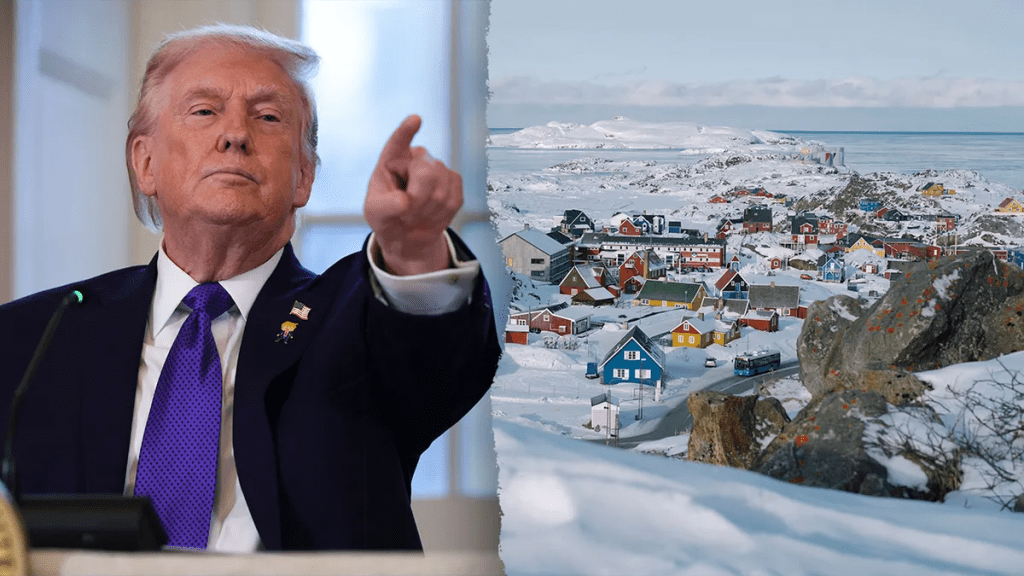
The Trump administration has escalated its push to take control of Greenland. President Donald Trump and senior officials have said the United States must acquire the Arctic territory to expand US military control in the region. Trump has repeatedly invoked Russia and China to justify US ownership of land that is part of the Kingdom of Denmark and home to roughly 57,000 people who have made clear they do not want to become American.
Danish Prime Minister Mette Frederiksen has warned that US threats against a NATO ally mark a serious break with basic principles of sovereignty. Greenlandic officials have reiterated that the island’s future is not Washington’s to decide. European leaders have largely rallied behind Denmark, warning that US claims over Greenland would undermine international law and the alliance structures the United States claims to uphold.
This response has done little to alter Washington’s position, exposing the familiar logic of US imperialism. The push to expand military control is framed as national security. Smaller nations are pressured to give up territory. Even US allies are treated as obstacles to overcome. Greenland’s political leadership and population have been clear in their opposition. The White House has been just as clear that it sees their consent as secondary.
Sources:
https://www.nytimes.com/2026/01/06/us/politics/rubio-trump-greenland.html
Trump Threatens War on Iran on Behalf of Anti-Government Protestors
Mass protests in Iran have now entered a third week. Nationwide demonstrations, the largest since 2022, begun at the end of December with the plummeting of the Iranian currency, which has now fallen to historic lows of over 1.4 million rials to 1 US dollar. But Iran has long been under economic and political duress as one of the world’s most sanctioned countries. It’s a familiar story: in 1953, the CIA and MI6 collaborated on Operation Ajax to depose the democratically elected prime minister, Mohammad Mosaddegh, who had just moved to nationalize Iran’s oil industry. Following the 1979 Iranian Revolution, the US launched a campaign of full-scale economic strangulation and military encirclement of the newfound Islamic Republic of Iran, disciplining the state for asserting sovereignty over its resources and building up defenses—and offenses—against US-Israeli imperialism.
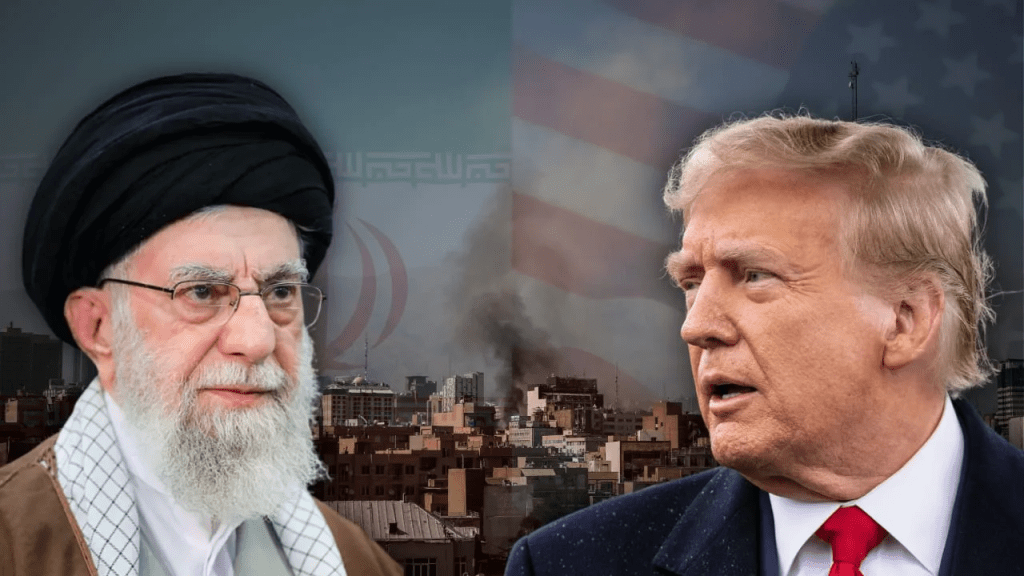
Today, this murderous imperialist campaign is reaching a critical point. The timing of the current protests coincides with a shifting geopolitical landscape: the recent US bombing of Venezuela and kidnapping of Maduro—and before that the fall of Assad in Syria—has left Iran exposed and isolated from its allies. And right on cue, on January 2nd, Trump openly threatened to strike Iran, citing the government’s authoritarian repression of dissent as pretext for all-out war. He wrote on X: “If Iran shoots and violently kills peaceful protesters, which is their custom, the United States of America will come to their rescue. We are locked and loaded and ready to go.” These threats on Iran come as Israel continues its genocidal assault on Gaza and, according to Somali’s Defense Minister, schemes to forcibly displace Palestinians to Somaliland. Netanyahu has also declared his awe and support for the protestors in their “struggle for freedom.”
Inside Iran, state security and paramilitary forces have responded to protests with live fire, mass arrests, and sweeping internet blackouts. According to a US-based rights group, the death toll of protestors is now over 500 and counting as of January 11th, and over 10,600 people have been arrested. Iranian officials have spent the last week drawing a sharp distinction between grassroots protestors and what they attribute as foreign-trained “terrorist elements” and “vandals” trying to please Trump. Iranian president Masoud Pezeshkian accuses the US and Israel of orchestrating the destabilization, arguing that “the same people that struck this country” during the Israel-Iran 12-day war in June are now “trying to escalate these unrests with regard to the economic discussion.” Tehran vows to retaliate should the US/Israel strike again.
Sources:
https://www.nytimes.com/2026/01/11/world/middleeast/iran-president-protests-economy-response.html
US & Venezuela Explore the Possibility of Re-Establishing Diplomatic Ties
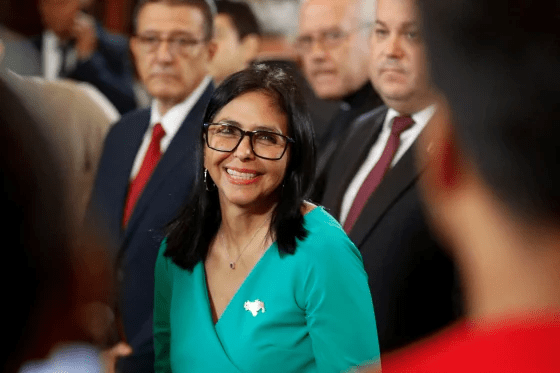
A week after the US military attacked and invaded the capital of Venezuela, kidnapping Venezuelan President Nicolás Maduro and First Lady Cilia Flores – “arresting” Maduro for the “crime of drug-trafficking” – the Venezuelan government has shared some updates: it is exploring the possibility of re-establishing diplomatic ties with the US – a US delegation has arrived in Caracas to do so – and they intend to send their own delegation to the US, as well.
In the statement released by Venezuelan Foreign Minister Iván Gil, the government emphasizes the condemnation of the US attack and kidnapping, calling it “criminal, illegitimate, and illegal aggression against its territory and its people,” and “a flagrant violation of international law,” revealing the death toll to be more than 100 Venezuelans.
The delegations from both nations seek to explore the possibility of re-establishing diplomatic ties, as well as for the “purpose of addressing the consequences of the aggression and kidnapping of the President of the Republic and the First Lady, as well as addressing a work agenda of mutual interest.” We will see in the coming days what the “mutual interests” between the two nations are exactly.
While these diplomatic “explorations” are being carried out, Venezuelan Vice President of Communication, Freddy Ñáñez, emphasized, “as a government, we are focused on the domestic agenda to guarantee our people’s right to peace and stability.”
While the US diplomats have already begun “conducting” their “technical and logistical assessments” in Caracas, according to the government’s statement, it is unknown when Venezuela’s delegation team will make its US visit due to the sanctions imposed on the country, which need to be waived to do so.
The sanctions that hinder a Venezuelan delegation from making their way to the US are the same ones that have strangled the economy of Venezuela for several years now; the mass immigration of Venezuelans to the US – a dangerous journey, involving traversing the Darien Gap, and in which women and girls are at a high risk of sexual violence, therefore taking birth control as a preventative measure – is a direct result of these sanctions.
While tension between the greedy, imperialist US, and Venezuela – which has the largest oil reserves on the planet – has spanned decades, Trump first imposed sanctions in 2019 during his first term. The same year, the US carried out a (frankly, embarrassing) coup attempt in which (in classic US imperialist intervention fashion) the electoral win of President Maduro was claimed to be illegitimate, with the US declaring its favored candidate, Juan Guaidó, to be the actual winner of the election; this never caught on, no matter how hard the US tried. It’s important to mention that the longstanding attempts at controlling the sovereign nation are a bipartisan effort; in 2023, under the Biden administration, all Venezuelan consulates in the US had closed their doors.
Sources:
https://www.telesurtv.net/venezuela-arribo-diplomaticos-estados-unidos/
https://www.telesurtv.net/venezuela-desmiente-visita-delcy-casa-blanca/
https://apnews.com/article/venezuela-us-diplomatic-relations-maduro-12eca94ea60dbdbc8d8ac37535a5d23b
https://pmc.ncbi.nlm.nih.gov/articles/PMC10003450/
https://www.visaverge.com/news/why-venezuelan-consulates-are-still-closed-in-the-united-states/
 Behind Enemy Lines