
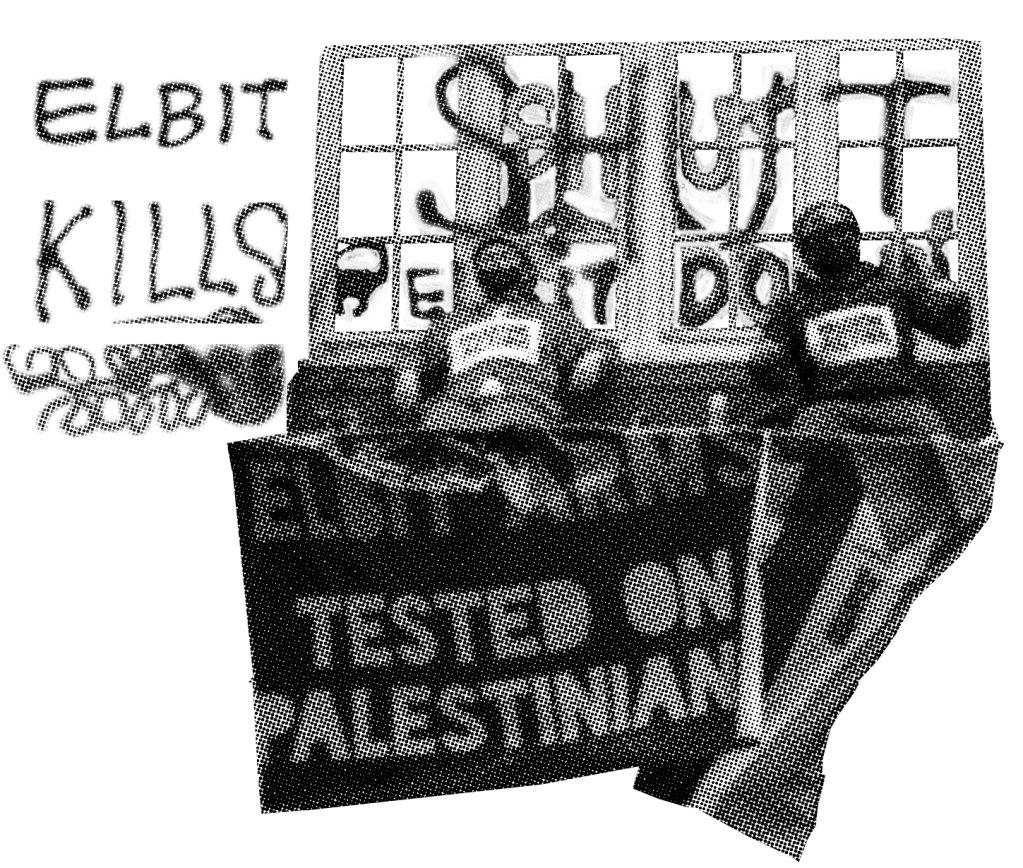
On October 7, 2023, the Palestinian people, led by Hamas, initiated Operation Al-Aqsa Flood. The objective was to break out of the open-air prison that was Gaza, and take the fight to the Zionist State of Israel, and Israel’s imperial master—the United States. The response from the United States and Israel was immediate: bombing operations commenced on October 7th, and by October 9th, Gaza was subjected to a siege by the IDF. On October 27th, the IDF invaded Gaza, initiating the worst genocide of the 21st century, and the worst in Palestine since the Nakba of 1948. Conservative estimates by the Gaza Health Ministry place the death toll in Gaza around 71,000, but the real figure is likely much, much higher.
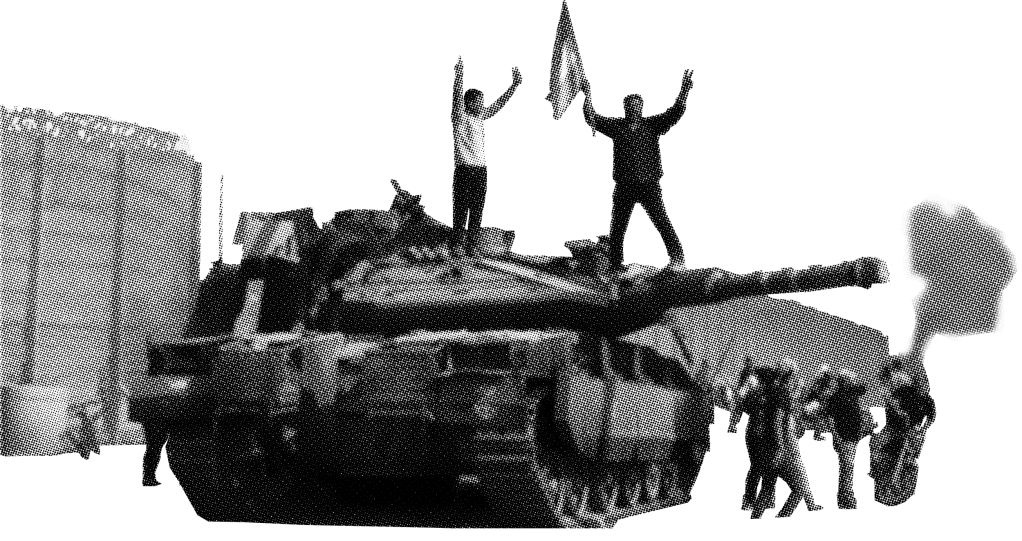
Palestinians rejoiced when they broke through Israel’s illegal apartheid wall during the Al-Aqsa Flood operation, October 7, 2023
The protest movement kicked off almost immediately, with millions of people taking to the streets out of a genuine horror and righteous anger. People tried to shut down weapons manufacturers, stop shipments of weapons, and interrupt countless politicians who were sending aid to Israel. Campus protests, often unauthorized by university administration, were met by repression, with administrators often arbitrarily changing guidelines to justify repression by campus security. In response to the inefficacy of mainstream, opportunist-led protests (or parades, more like), and the repression of more militant student protests, a group of students at Columbia University established the Gaza Solidarity Encampment on campus grounds. This was the first of over 140 university encampments across the US.
Encampments
The initial Gaza Solidarity Encampment at Columbia University, established on April 17, 2024, was militant, intending to occupy university grounds and push for material demands. The militancy of the action created a dividing line, with careerist professors and petty-bourgeois students distancing themselves from the encampment. The demands of the Gaza Solidarity Encampment were just, correct, and frankly, quite reasonable:
- Divestment of Columbia University from corporations that profit from the US-Israeli genocide in Gaza
- Full disclosure of all of Columbia’s investments
- The academic boycott of Israel
- An end to displacement in Palestine
- An end to the repression on campus
- A call from the university for a permanent ceasefire.
On April 18, less than a day after the establishment of the encampment, campus administration—under the leadership of disgraced former Columbia University President Minouche Shafik, whose term was cut short—summoned the wardens of bourgeois class rule in New York: the NYPD. After a standoff, the NYPD breached the encampment and arrested nearly 100 protesters. Onlookers, mostly Columbia students and leftist activists, quickly established a new encampment across from where the first had been, but the floodgates of state repression had been opened. Over the course of the next three months, at least 3,100 students were arrested, possibly more; the highest estimates have arrests of student demonstrators in 2024 tied with the 4,000 arrests of students in 1968. A pattern quickly emerged in the student movement across the United States—students would undertake a bold, defiant action, such as in April of 2024, when 26 protesters stormed and occupied the Golden Gate Bridge, stopping traffic for several hours before they were all arrested. Seven of them were charged with felony conspiracy, and the rest with misdemeanor conspiracy. Additionally, the San Francisco District Attorney put out a call for anyone ‘inconvenienced’ by the traffic stoppage to file claims against the protesters; more than 200 people did so. The Bay Area has long been a hotbed of militant resistance to US imperialism; in June 2024, 13 Stanford University students occupied the university president’s office after Stanford had refused to hold talks about divestment from Israel. Students held the president’s office for several hours, chanting, spray painting, and building barricades, before they were arrested, suspended, banned from campus, and slapped with felony charges.
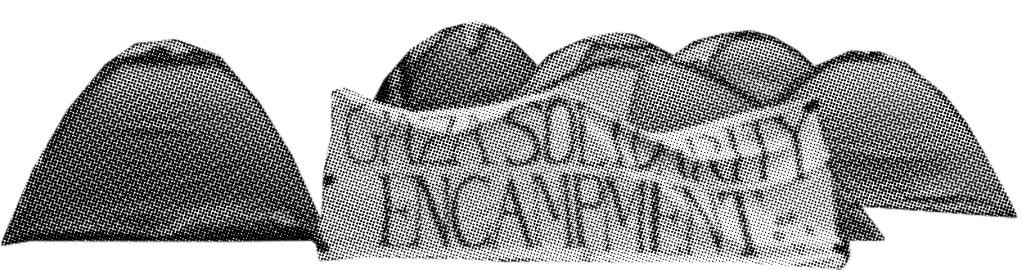
Tents on the lawn of Columbia University during the Gaza Solidarity Encampment, April 2024
In the 1960’s and 70’s, it was actually extremely rare for protesters who were arrested to be actually charged with a crime—most charges were dropped. While this appears to have also largely been the case in 2024, a higher proportion of people arrested at protests faced charges, including felonies. The willingness of prosecutors across the United States to bring charges against protesters is disturbing, and this willingness is attributable, to a significant degree, to a lack of mass mobilization to defend those facing state repression. The movement today lacks the revolutionary convictions of the 1960’s and 70’s, and it lacks the organizational strength and discipline of groups like the Black Panther Party and the Revolutionary Communist Party (The RCP was cool at the time; it didn’t start getting really weird until the 2000’s).
We must learn from the experience of the past, for it shows that mobilization, rather than capitulation, is the best defense against repression. In the 1960’s and 70’s, the Black Panther Party frequently put out calls to mobilize in support of BPP members or other protesters who were arrested, organized fund drives to pay for bail, did jail support, and wrote exposés on instances of state repression. It was found that the state tended to back down in the face of mass mobilization, or if the state didn’t back down, often charges were dropped on account of failures of the police to provide adequate evidence, prosecutorial missteps, or even open bias on the part of the judge ruling on a particular case, as happened with the infamous trial of the Chicago 7 in 1969. In 2024, over 60 people were arrested at the ‘Make it Great Like ’68’ protest against the Democratic National Convention, organized by Behind Enemy Lines. BEL immediately gathered outside the jail where protesters were being held, put them in touch with legal counsel in the form of the National Lawyers Guild, wrote extensively about the repression, and accompanied people to their court dates. In the end, not a single person was found guilty, including 10 brave comrades who insisted their cases be brought to trial.
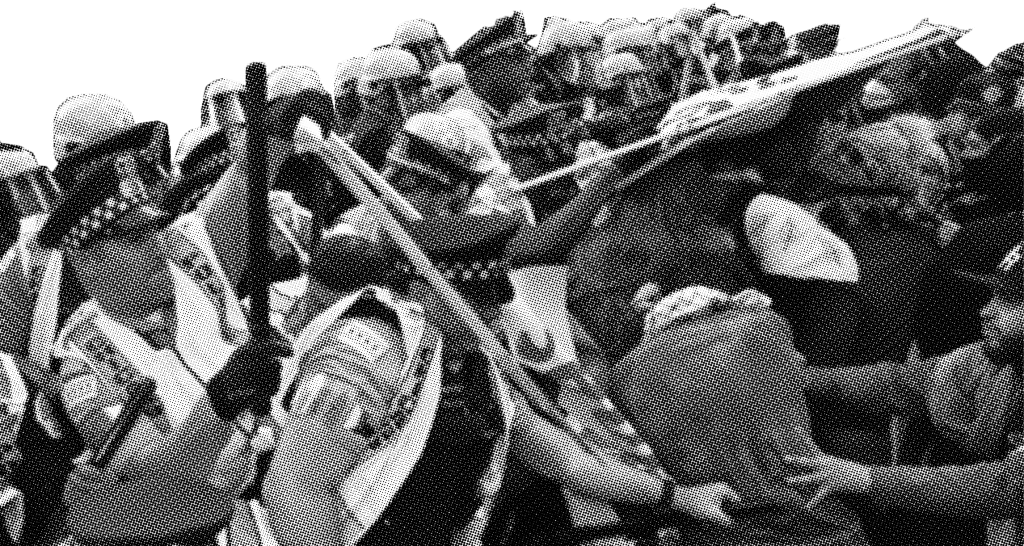
Chicago Police ambush protestors outside the Israeli consulate at the Make it Great like ’68 anti-DNC protest, August 2024
Capitulation in the face of repression is the death of the movement, and of any hope for justice, for a better future. Our best defense against repression is stand with each other. Any brave individual who defiantly throws down the gauntlet of resistance against the United States empire must be defended, for these people are the most precious asset of the masses, potential leaders who must not be allowed to be crushed by the ruling class, as happened in the case of Casey Goonan. Casey was alleged to have used an incendiary device to burn a University of California Police Department patrol vehicle, and for calling on others to undertake similar actions. They were arrested on June 17, 2024, and did enjoy support from a small number of friends and comrades, but their case was essentially ignored by the broader pro-Palestine movement, and as a result, on September 25, 2025, they were found guilty of the aforementioned arson charge, and sentenced to 19 years in prison, plus 15 years of supervision after their release; they were 35 at the time of sentencing, so this is essentially a life sentence. What could have happened if calls were put out for the masses to rally behind Casey? If all those with the fire of justice in their hearts had rallied around them, perhaps this tragedy could have been averted, and Casey Goonan would be free today, or at least serving a lesser sentence. This is the cost of abandoning those who face repression, the cost of capitulation.
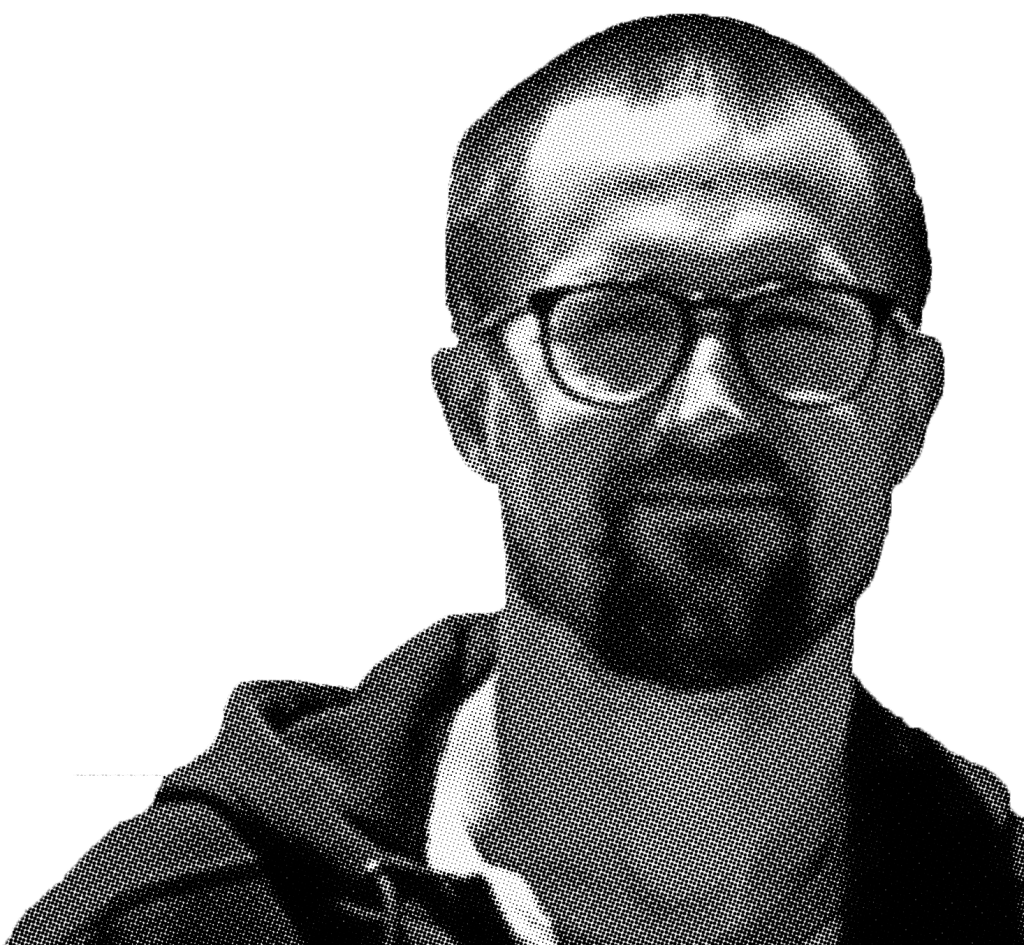
Capitulation in the face of repression is the death of the movement, and of any hope for justice, for a better future. Our best defense against repression is stand with each other.
Casey Goonan, Political Prisoner
Mahmoud Khalil and the Repression of Immigrants
Mahmoud Khalil was arrested by the Department of Homeland Security on March 8th, 2025. He was standing in the lobby of the Manhattan apartment where he lived with his wife, Noor Abdalla, who was then eight months pregnant. The DHS agents told him he was being detained because his visa had been revoked. When he told them he didn’t have a visa and was a green card holder, they arrested him anyway. Mahmoud was a student at Columbia University and had become the spokesman for the Gaza Solidarity Encampment there, and was largely responsible for handling negotiations between the protesters and Columbia’s administration. After being detained, he was transported to an ICE detention facility, where he was told he was arrested on the basis that Marco Rubio, the Secretary of State, had deemed him a “threat to US foreign policy”, which Rubio has the power to declare on the basis of the Immigration and Naturalization Act of 1952; the relevant clause reads: “An alien whose presence or activities in the United States the secretary of state has reasonable ground to believe would have potentially serious adverse foreign policy consequences for the United States is deportable.” It is fairly clear that Mahmoud Khalil and the encampment movement in general were not a serious threat to US foreign policy, though perhaps we can grant them a little grace and acknowledge that they were certainly a nuisance, particularly to university administrators.
Regardless of the actual impact of the university encampments, it is unquestionable that Mahmoud Khalil was a political prisoner. He was explicitly detained on the basis of political speech and threatened with deportation despite being a permanent resident. He was denied access to a lawyer, missed his own graduation, and missed the birth of his child—he had applied for furlough from prison to be present for the birth, but this was flatly denied, despite the fact that he was not considered a flight risk; in Mahmoud’s own words: “…they refused because their main goal out of this is to punish me, to make an example out of me, to be as cruel as possible.” This is precisely what the US government does regularly to anyone who resists the oppression of the US ruling class, whether the crimes of US capital take place at home or abroad. Ultimately, Mahmoud was released on bail on June 20, 2025. His detention had been ruled unconstitutional by a federal judge on the basis that he was arrested for exercising his right to free speech, which does indeed apply to permanent residents as well as citizens of the US. Mahmoud is still subject to deportation.
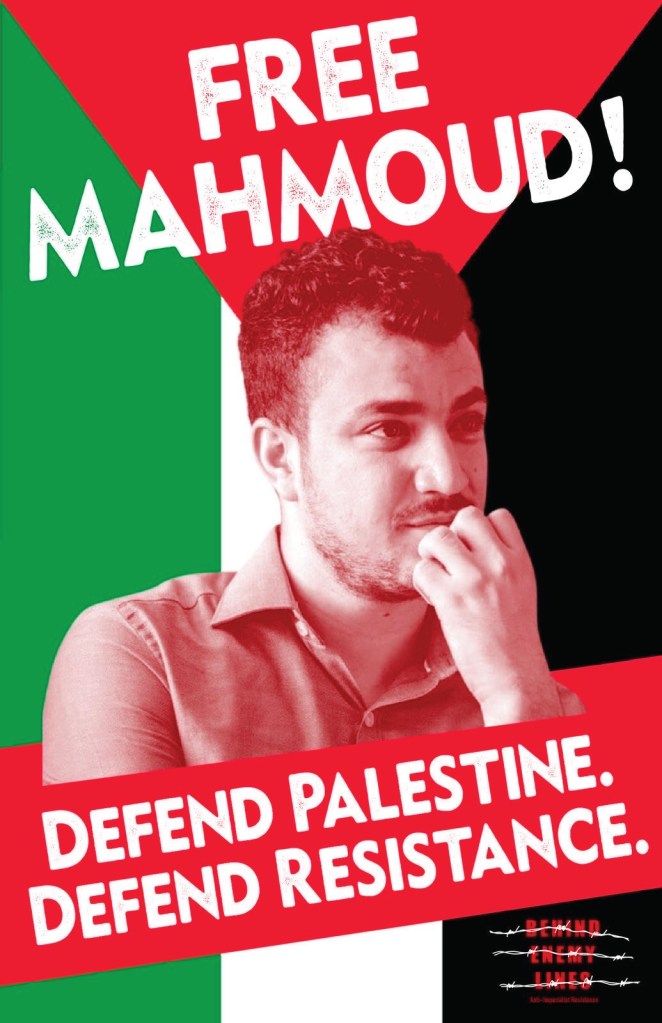
“Behind Enemy Lines is committed to standing with Mahmoud Khalil, and everyone else under attack for standing up for Palestine! As people who live in this country, we believe that we have an obligation to stand with the courageous resisters who are targeted for repression by the US government, whether they’re facing repression in the streets, in courtrooms, or on campuses. The attack on Mahmoud Khalil is an attack on everyone in the US who is standing up for Palestine. We must get his back!“
– Excerpt from Behind Enemy Lines’ statement on the kidnapping of Mahmoud Khalil
Mahmoud Khalil was not alone in facing the wrath of the United States ruling class. On the campaign trail, Trump had told a room full of his ruling-class donors, “One thing I do is, any student that protests, I throw them out of the country. You know, there are a lot of foreign students. As soon as they hear that, they’re going to behave.” Trump certainly keeps his promises; by April 2025, over 1,100 students had their student visas cancelled by the State Department. The excuses presented by the government are myriad, and can be as petty as misdemeanors or delinquent parking tickets, but in many cases, the reasons for the revocation of a student’s visa are the very same as was with Mahmoud—that the individual in question somehow threatened US foreign policy by participating in pro-Palestine campus protests or encampments. We have all clearly seen the US war on immigrants, and that struggle is ongoing, though it is not our focus here, so we’ll not belabor the point, but we would be remiss if we did not bring up the fact that on January 15, 2026, a federal appeals court reversed the decision to release Mahmoud Khalil on bail. As of now, a deportation order has been put out for Mahmoud’s deportation to Algeria, a country in which he holds birthright citizenship, but in which he has never resided. He has not yet been re-arrested, but it seems inevitable that he will be detained and deported by the United States, unless a broad movement to defend him coalesces. It is our task to defend Mahmoud Khalil and anyone who stands up to imperialist depredations of the US empire.
Palestine Action Resists Genocide, Turns Repression Into Site for Further Resistance
Repression of pro-Palestine speech and action in the United Kingdom has also appealed to a bankrupt concept of “terrorism”, both through applying the designation to activist groups and through accusing people speaking out for Palestine of supporting terror groups. One of the most high-profile cases of this repression has been the banning of Palestine Action UK.
Palestine Action UK is a small, militant direct action group that took up the task of interfering with the war machine from within the belly of the beast. In August of 2024, in Filton, Bristol, six members of the group entered a headquarters building of Elbit Systems, the primary supplier of Israel’s weapons. Once inside, they dismantled the murder weapons used by the IDF, including their notorious quadcopter drones that have been used in the massacres of children in Gaza.
Later, in June 2025, several other Palestine Action members broke into Brize Norton, a Royal Air Force base, and graffiti’d military aircraft with spray paint and crowbars. The British government came up with outlandishly high numbers for the monetary damage done to planes, with little to no proof. To anyone who recognizes the United Kingdom’s role in the genocide in Palestine and in the violence of imperialism as a whole, this redecoration of British planes being portrayed as more terroristic than the mass murder of Palestinians is ridiculous and propagandistic, regardless of one’s personal feelings about the efficacy of direct action.
In July 2025, after these bold and commendable acts of protest, targeting sites directly linked to the United Kingdom’s aid of Israel’s genocidal war on Gaza in an attempt to take resistance to the genocide from performative speech to meaningful action, Palestine Action UK was proscribed under terrorism legislation. This not only criminalizes membership in the group but makes it a crime to express support in any way, be it verbal, written, or through clothing, art, or protest signs. People linking up with or expressing support for Pal Action face up to fourteen years in prison.
The willingness of prosecutors across the United States to bring charges against protesters is disturbing, and this willingness is attributable, to a significant degree, to a lack of mass mobilization to defend those facing state repression.
Since the ban, over 2,000 people have been arrested for expressing their support for Palestine Action, including Greta Thunberg, the former liberal climate darling who has now become a strikingly rebellious anti-genocide protester (kudos to her for never selling out despite myriad opportunities!).
The proscription has since been overturned as of Friday, February 13, by a decision made in the British High Courts that decided that the designation of Palestine Action as a terrorist group was “disproportionate and unlawful”. Three judges ruled that the ban was an infringement of the protected right to protest. Though British police continue to gather evidence on Palestine Action and its supporters for “potential future prosecution”, being a member of or expressing support for the group is no longer a criminal action. Huda Ammori, one of the founders of Palestine Action, described the victory as “monumental”. However, Shabana Mahmood, Britain’s Home Secretary, stated her intent to challenge the overturning, saying that she “disagree[s] with the notion that banning this terrorist organisation is disproportionate”, so it looks as though the repression of Palestine Action is far from over.
While supporters of Palestine Action faced repression just for speaking out against the genocide and in solidarity with the group, the arrested actionists who chose to actually disrupt the British war machine face even worse repression in jails and prisons around the UK. 24 Pal Action members arrested for the Elbit Systems break-in, known commonly as the Filton 24, faced pre-trial incarceration times significantly longer than is normal in the British legal system. According to the Electronic Intifada, “[s]uch prisoners can usually be held on remand before trial for up to six months. But the politicization and fallacious government ‘terrorism’ campaign against the group—in connivance with Israel—meant that the campaigners have been held on remand for as long as 17 months.” While waiting for their trials, the Filton 24 political prisoners have faced egregious conditions. They were allowed minimal visits, barred from library and gym visits, forbidden from having prison jobs, and subject to “non-association orders”, restricting who they’re allowed to talk to within the prison (a tactic frequently used to prevent organizing behind bars). This is all despite the fact that none of them have been charged with anything beyond ordinary criminal offenses. The UK government alleges a “terrorism connection” in order to make an example out of them—the treatment they have been facing is, as the British government wants to make clear, what awaits anyone stepping outside the parameters of peaceful, polite parades.
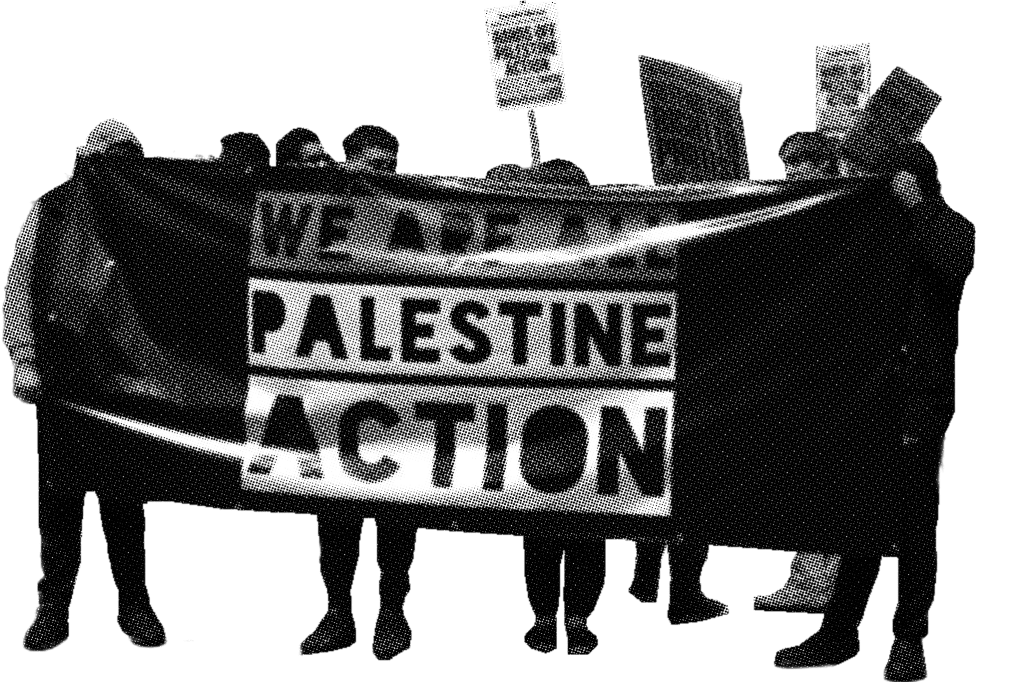
Protestors in the UK standing with Palestine Action, June 2025
Despite all the abuses being thrown at them, the imprisoned Palestine Action members have not backed away from putting themselves on the frontlines of the fight. In November 2025, eight Palestine Action members, some arrested for the Filton weapons dismantling and others for the Brize Norton plane redecoration, went on hunger strike, with the following five demands:
- An end to the censorship of prison materials
- Immediate bail for Palestine Action-related prisoners
- The right to a fair trial with public release of trial documents
- De-proscription of Palestine Action
- Cease government contracts with and ties to Elbit Systems
Throughout the world, hunger strikes have been used by prisoners as a powerful last resort tactic, wagering their lives against the likelihood that the government holding them captive will want to avoid negative press for letting them starve. In England, hunger strikes have an especially storied history—in 1981, during “the Troubles”, the height of armed struggle between the Irish Republican Army and the occupying British forces, ten Irish Republican prisoners starved to death on a hunger strike. These brave and well-known prisoners died after between 60 and 80 days of the hunger strike; strikers from Palestine Action maintained similar lengths of their strike. The last prisoner to refuse food, Heba Muraisi, went 73 days, and eventually initiated a water strike as well.
As of February 2026, all eight hunger strikers have called off their strike and are receiving medical treatment. The most significant victory that these strikers have reported is the UK’s recent decision to cancel a £2 billion contract with Elbit Systems, which was the catalyst for the prisoners to end their strike. One must note that the contract is instead going to Raytheon, a company that has also made deals to provide cutting-edge murder technology to the IDF. It’s also hard to say whether this decision was directly in response to the hunger strikes. However, since the strikes drew widespread protest and media attention, they certainly contributed to public perception of government contracts with Elbit. Other demands that the strikers won at least in part included the disclosure of export licences for the last five years from Elbit Systems, part of their demand for a fair and public trial, and access to radical literature about Palestine.
Another victory for the prisoners came on February 4, when six of the Filton 24 actionists were acquitted on the charge of aggravated burglary for breaking into the Filton R&D facility of Elbit Systems—Israel’s largest weapon manufacturer; a guilty sentence could have led to life imprisonment. All six had pleaded not guilty to the charge, rather than take plea deals.
After an 8-week trial, the jury came to a verdict for the six defendants, Charlotte Head (29), Samuel Corner (23), Leona Kamio (30), Fatema Zainab Rajwani (21), Zoe Rogers (22), Jordan Devlin (31):
CHARGE: Aggravated Burglary
VERDICT: All Defendants — NOT GUILTY
CHARGE: Criminal Damage
VERDICT: All Defendants — NO VERDICT
CHARGE: Violent Disorder
VERDICT: Head, Corner, Kamio — NO VERDICT; Rajwani, Rogers, Devlin — NOT GUILTY
Aside from those three charges, Samuel Corner was singularly accused of Grievous Bodily Harm With Intent, the result being NO VERDICT. For this reason, he has not been released with the other five, remaining unjustly imprisoned. The condition set for the five released allows them “only one electronic device with internet access, and it must be made available for inspection on demand by police.”
The several “No Verdict” results required the prosecution to make a decision: either drop the charges of Criminal Damage, Violent Disorder, and Grievous Bodily Harm, or call for a retrial. Unshockingly, the prosecution announced, via a post on X, that they plan on calling for a pretrial in the coming days, though it’s unclear which of the several “No Verdict” outcomes this will apply to. While the dropped charges against the actionists and the walking back of the terrorist designation prove the importance of sticking to radical principles while fighting legal battles, we can see from the backlash that the British government is not planning on obeying its least genocidal judges and courts. For any longstanding defense against repression, the bourgeois legal system can never be more than a tool, and will always serve to enforce imperialism and capitalist property relations more than to bring justice.
All in all, the bold actions that the Palestine Action activists took, the severe repression they faced, and the ways in which they continued to fight repression even behind bars and at risk of starvation, should serve as a model to anyone looking to fight against imperialism anywhere in the imperial core. While BEL does not advocate a precise replication of what they didwe prioritize harnessing and unleashing the energy of the masses to step out of line and make things rowdy rather than small clandestine actions—what Palestine Action proved is that, among a sea of capitulationists and people obsessed with safety above all else, real resistance and victory come only when repression is met with more, not less, resistance.
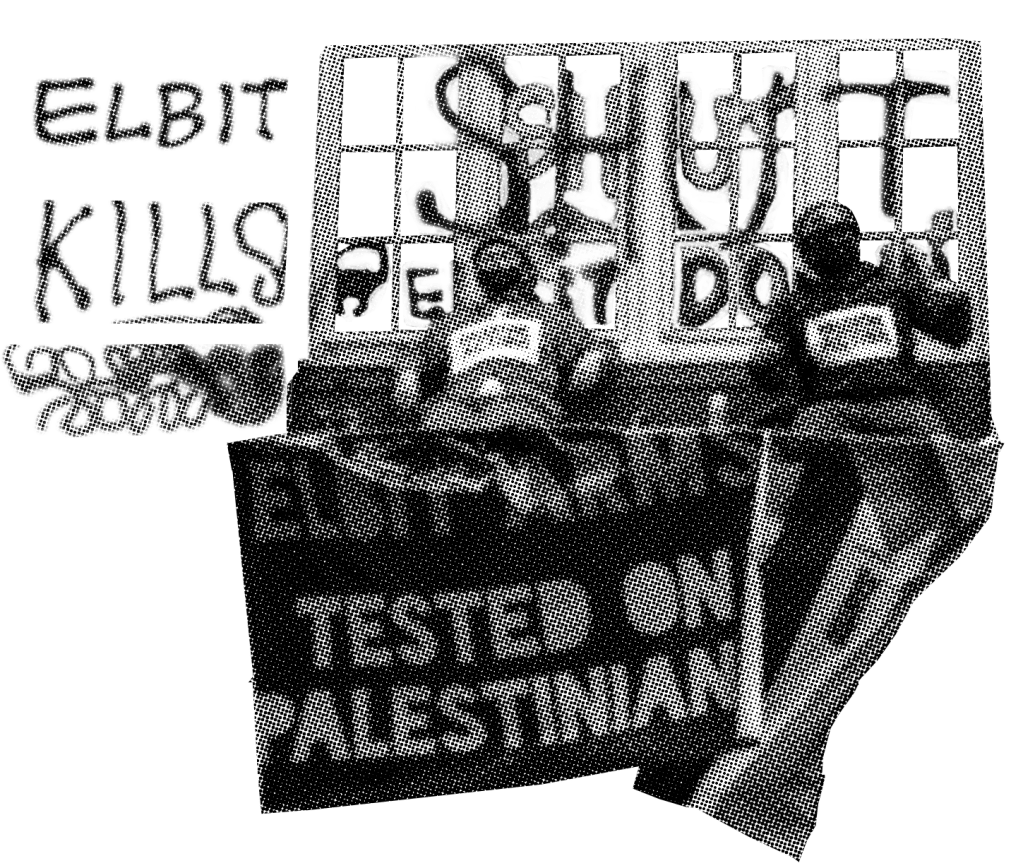
Two Palestine Action members spray-painted the location of the UK Elbit Systems facility, calling out the weapons manufacturer’s complicity in Israel’s genocide of Palestinians through its production of weapons that are then provided to the IDF to kill thousands, June 2021
 Behind Enemy Lines