
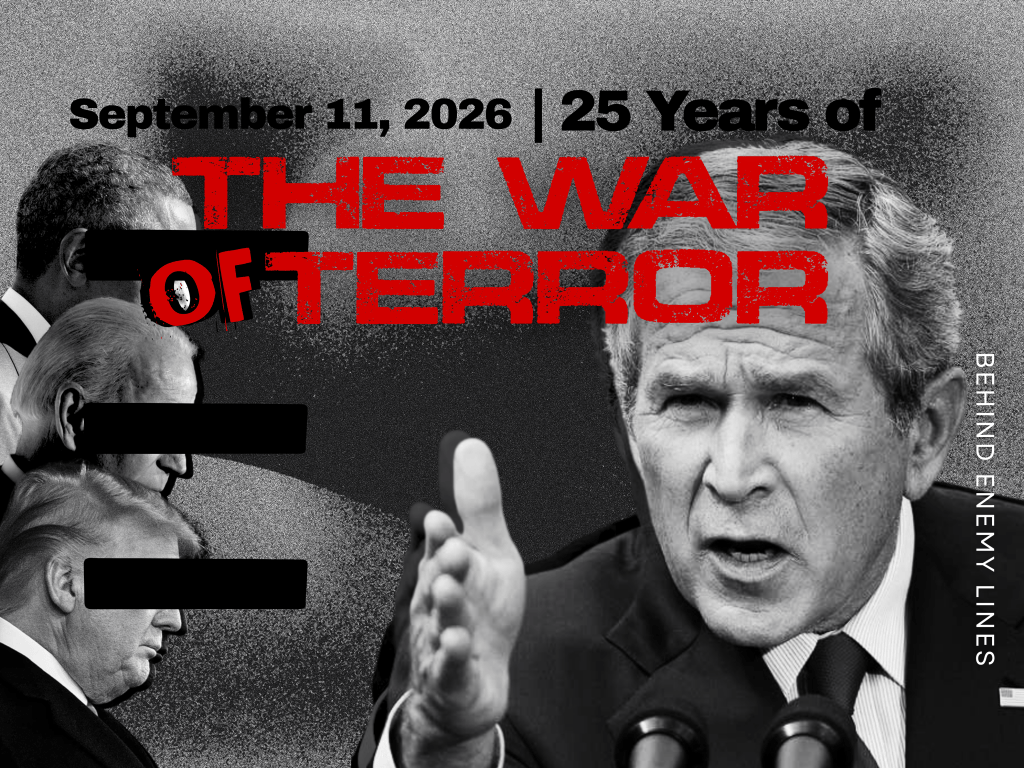
4.5 million people dead. 38 million displaced. $8 trillion spent. This is the legacy of twenty-five years of the War of Terror.
In the 25 years since September 11, 2001, the United States’ post-9/11 wars and military actions have left a trail of devastation stretching far beyond Iraq and Afghanistan. From Pakistan to the Philippines, from Syria to Yemen, Somalia, and Libya, war and counterterrorism operations spanned across the globe. Brown University’s Costs of War Project estimates that at least 4.7 million people have died from the consequences of the War of Terror, with at least 38 million displaced from their homes. The financial cost? Over 8 trillion dollars since 2001.
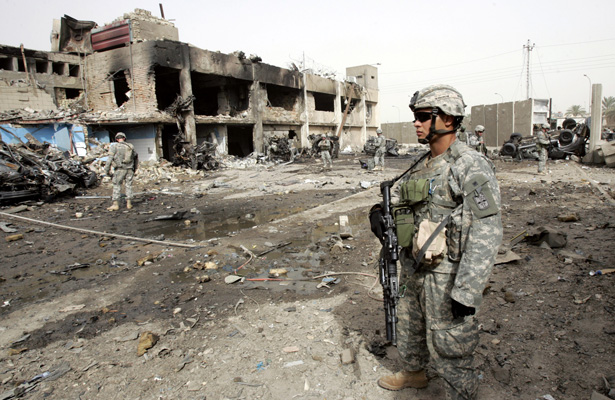
These numbers are so large, they become difficult to comprehend. Four and a half million people is more than the population of LA — or roughly equivalent to the population of Louisiana or Kentucky. Thirty-eight million displaced people is a human migration on a scale impossible to fathom. And the deaths did not end when the bombs stopped falling. Millions are estimated to have died indirectly as war destroyed hospitals, economies, infrastructure, food systems, and access to clean water and medical care. It’s impossible to set foot in Iraq or Afghanistan and not see the wreckage from the US invasions.
September 11, 2001 provided the immediate political catalyst for US imperialist expansion. Nearly 3,000 people were killed in the attacks on the World Trade Center, the Pentagon, and aboard Flight 93. In the fear and grief that followed, President George W. Bush’s administration declared a global “War on Terror”, or as we rightly call it, the War of Terror. Afghanistan was invaded within weeks and Iraq followed in 2003.
The machinery that would wage these wars did not appear overnight. US military intervention, sanctions, alliances, arms sales, and political involvement in the Middle East long predated 9/11. What changed after the attacks was the scale and the justification. Under the guise of national security, counterterrorism, and democracy, the United States acquired an extraordinarily broad mandate to wage war abroad with overwhelming national and international support.
The first battlefield of the War of Terror was in Afghanistan. On October 7th, 2001, the US launched Operation Enduring Freedom. The publicly stated mission was to destroy al-Qaeda and remove the Taliban government. While the government fell within months, the war raged on for over 20 years. Enduring through four different presidencies (both democrats and republican), what was initially propounded as a campaign of counter-terrorism swelled into a global reign of US terror.
Ten years after the first bombs fell, Zack Kam was deployed. Behind Enemy Lines spoke with Zack, a Marine Corps veteran who was deployed twice to Afghanistan during Barack Obama’s first term.
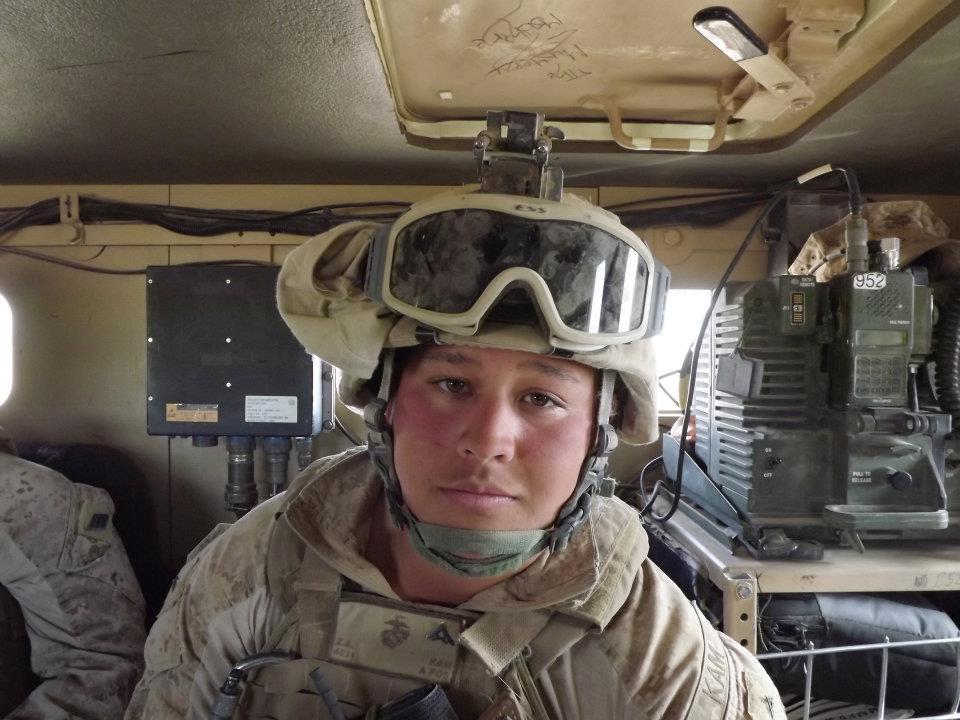
The journey to becoming an anti-imperialist veteran was a long one. Zack grew up in a conservative household, with a constant stream of right-wing TV and radio serving as the soundtrack for his upbringing. Struggling in school, he was pushed towards the military, presented as the only alternative to going to college. There was a contradiction familiar to many military families: an abstract reverence for “the troops” alongside an unwillingness to confront what joining the military actually requires. In 2011, Zack was deployed.
He was deployed to Marjah, Afghanistan, as a combat engineer. For seven months, he was in charge of ‘route clearance’, where US soldiers would ensure the roads were safe for other US military personnel to travel. During his second deployment, he went to Sangin, which he referred to as “a hotbed of resistance in Helmand Province”.
Zack wasn’t involved in the most egregious crimes committed in Afghanistan by the hands of the US military (Azizabad Airstrike, Kunduz Hospital Airstrike, Bagram Detention Torture, the deplorable Maywand District “Kill Team,” to name a few) but did share one story that underscores how horrific the role that the US military and its soldiers play.
It was 2013, Zack’s second deployment, and the US forces were getting ready to pull out of parts of Afghanistan, so Zack’s unit was in charge of tearing down patrol bases. Typically, security forces would keep locals away from the soldiers. That day, Zack remembers, the security wasn’t there. Around 1,500 people surrounded the soldiers. Zack recalls their rightful anger: throwing rocks and stealing from the trucks. He admits he probably would’ve done the same if he were in their shoes. Then someone takes a military encryption device concealed in a bag.
“I get told that, you know, I have to shoot and kill this guy to get the bag back. And I really, really didn’t want to do that. He had no idea what was in the bag. He doesn’t read English, and there’s no way that he could have known what our com guy’s name was. And so I just, like, yelled at him and I was crying a little bit, like, come on, dude, just drop the fucking backpack, or I’m going to have to kill you. It took probably a couple minutes longer than the people in charge of me would have liked, but he ended up just dropping it, and we, I went and got it, and nobody got hurt or killed that day.”
And just like that, a life was spared. It’s a short story, but chilling. It encapsulates the godlike nature the US military plays: play by their rules or be killed. Thousands of encounters between Afghans and the US military throughout the 20-year occupation ended differently.
By the time US troops withdrew in 2021, the war had completely devastated Afghanistan. The numbers alone do not capture the loss. Destroyed infrastructure, disease, and destabilization are a few of the lingering consequences. The longest war in US history consumed hundreds of thousands of lives and left a mass of damage in its wake. The Taliban has since returned to power.
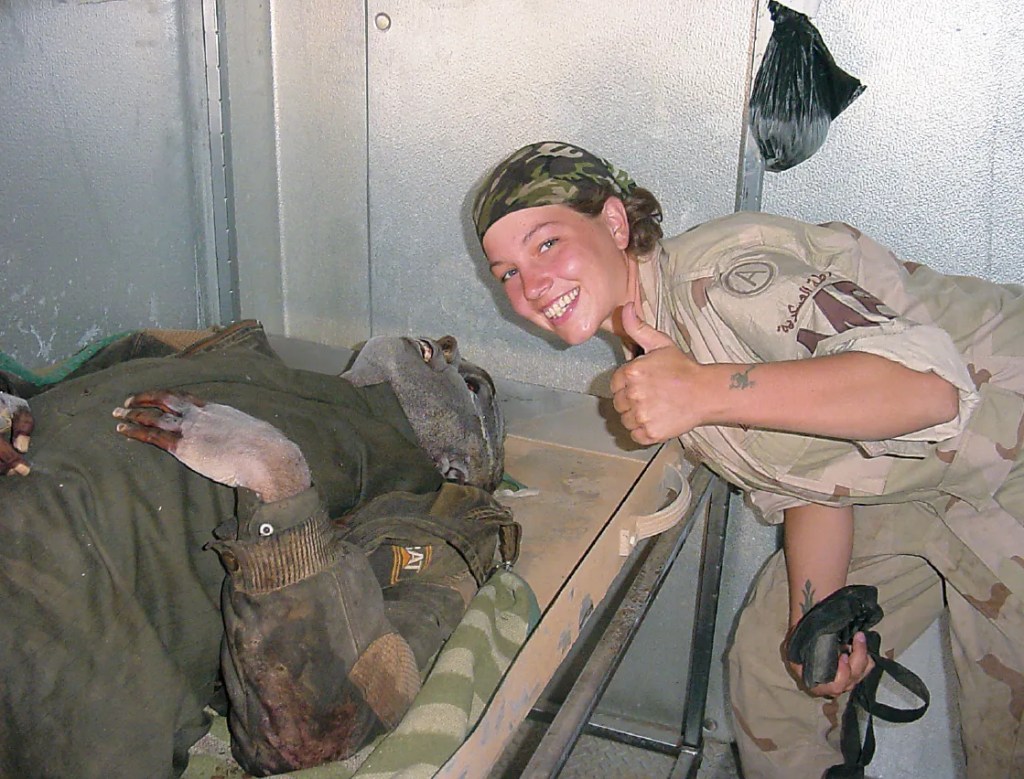
When Afghanistan was invaded, it was presented to the public as a direct response to 9/11. 18 months later, when Bush invaded Iraq, he needed further justification. Bush claimed Saddam Hussein had weapons of mass destruction and an imminent threat to the safety of freedom and democracy. He lied. On March 19th, 2003, the US invaded Iraq. The invasion dismantled much of the state; Baghdad fell quickly and mass chaos ensued. War waged on, as did the search for weapons of mass destruction (that would never be found) for 8 years. An estimated one million Iraqis’ lives were stolen. Horrifying stories painting new pictures of the horrors of war emerged; such as those from Abu Ghraib, an infamous prison where US soldiers tortured and abused prisoners; or the Second Battle of Fallujah, in which US Marines murdered unarmed prisoners and used white phosphorus (a powerful chemical incendiary, which burns intensely, even underwater or when buried) against civilians. The US formally pulled out in 2011, but Iraq has faced instability since in part due to the war in Syria and the US re-engaging from 2014 through 2017. If George W. Bush will be afforded a burial despite his crimes against humanity, his tombstone should read: Butcher of Iraq.
The War of Terror extended beyond the borders of Afghanistan and Iraq. What began as a declared response to 9/11 rapidly developed into a sprawling global apparatus of military bases, drone strikes, deployments, surveillance, and the training of foreign militaries. Within months of the invasion of Afghanistan, the US was opening new fronts of war. In January 2002, US forces were deployed to the Philippines as an extension of Operation Enduring Freedom, which would last more than a decade. Across Africa, the US expanded its operations in Mali, Djibouti, Somalia, Ethiopia, and Kenya. The US carried out strikes in Pakistan, Yemen, Libya, and Syria. Troops were sent to Cameroon for training and intelligence support. Over 85 countries were impacted by military operations in the War of Terror.
The scale of expansion is staggering, even beyond the number of countries impacted. It’s also evolving. The fight against “Narcoterrorism” in Central America, the US-Israel Genocide on Gaza, and the War with Iran. These are all extensions of the War of Terror, creating an entire framework for imperialist expansion and control, reaching every corner of the globe.
From the moment the War of Terror began, so did resistance to it. In the United States, even before the first bombs dropped, tens of thousands of people took to the streets. These demonstrations emerged at a moment when fear was widespread and public support for military action was high. But the anti-war movement did not emerge from nowhere. It collided with and grew out of a broader anti-globalization movement that had developed throughout the 1990s against the expanding power of institutions like the World Bank, the International Monetary Fund, and the World Trade Organization.
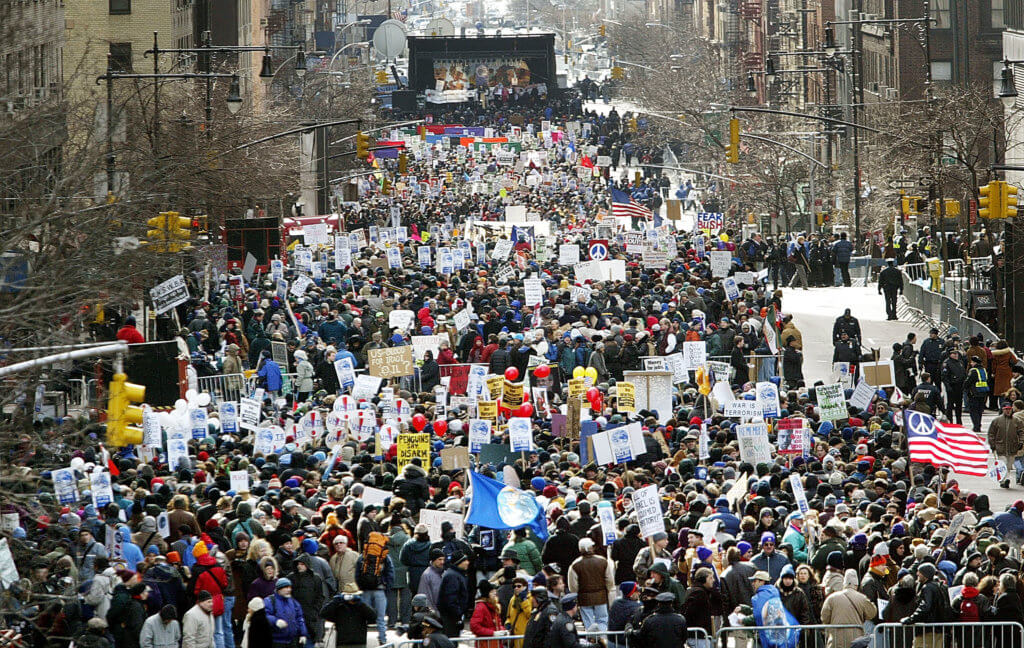
While the US government overwhelmingly rallied behind war, there were some dissenting voices. Representative Barbara Lee of California cast the only vote in either chamber of Congress against the 2001 Authorization for Use of Military Force. The House passed the resolution 420–1; the Senate approved it unanimously. As the Bush administration turned its sights toward Iraq, resistance grew with it. Organizations, unions, students, veterans, religious groups, Muslim and Arab communities, and longtime peace activists mobilized against the coming invasion. Opposition to the war was becoming a mass movement that spread across the globe. Countless days of mass, global protests followed. As the invasion of Iraq loomed near, the protests heightened. February 15th, 2003 was a massive international day of protest. Millions took to the streets, from New York to Damascus to Sidney. The international character of protest mirrored the deep international web that the US military had spun. But the invasion came anyway.
As the wars dragged on, a new group of anti-war protestors joined the mix—veterans. Those returning from Afghanistan and Iraq joined organizations protesting the war, sharing stories of the atrocities and unnecessary death and destruction. Iraq Veterans Against the War, now known as About Face, was launched in July 2004.
Zack didn’t become an anti-imperialist while deployed. He described how his preconceived ideas were challenged and how that started to form cracks. How could rural farmers pose a threat to people thousands of miles away? I am just surrounded by families going on about their lives; what am I doing here?
Despite little sparks igniting throughout his time in the Marine Corps, the sparks finally caught when he saw how US police responded to righteous protestors after the murder of Mike Brown in 2014.
“I was watching police roll up on these protesters in almost identical trucks that I had just spent months sitting in across the world. And it was very clear to me that they were doing to Americans what we were doing to Afghans. Those cracks really started to deepen and pull things apart for me.”
It’s challenging to understand how soldiers travel thousands of miles and carry out the dirty work of the US empire and don’t all come out the other side as staunch anti-imperialists. While some soldiers are and will remain true enemies of the people, it is also important to acknowledge the intensity and effectiveness of the propaganda machine. In a post 9/11 world, the War of Terror heavily relied on propaganda. Vilifying an entire region and portraying Islam as a dangerous religion fueled the perception that war and invasion were necessary. Islamophobia and xenophobia seeped into every aspect of life. News reporting, pop culture, it even impacted the games children played (cops and robbers turned into battles against al-Qaeda). That, alongside patriotism and the promise of protecting democracy, freedom, and liberty, positioned the military as a moral force of good. The result? There was initial widespread support for the invasion of Afghanistan and Iraq, not just from people in the United States but also from other imperialist allies across the globe. Zack described how the widespread support, especially in conservative spaces, compared that to the popular sentiment of the war on Iran in 2026, which is widely condemned both in the US and abroad.
While acknowledging the propaganda machine, there is still a contradiction between veterans and anti-imperialism. US military personnel are the foot soldiers for US imperialism. For Zack, confronting what he had participated in meant confronting his own responsibility for it.
“I think, the moral injury of, you know, having taken part in it myself and helped subjugate entire population for over a year. I helped directly and that was part of a 20 year campaign, so there is some guilty conscience, but I guess I’m not gonna kill myself, so what other choice is there, except to try to make it better and try to make amends? I think that’s where a lot of veterans kind of get stuck. I think it’s really difficult for people to come to terms with the fact that they were on the wrong side of something… You kind of have two choices, I think, when you come to that realization: it’s, like, you can accept it and try to make up for it, or you can deny it, and be like, everything was great.”
BEL was first introduced to Zack in early 2024. He famously burned the American flag he flew over Afghanistan at BEL’s Cancel the DNC protest in front of Chicago City Hall, both in protest against the DNC in Chicago but also as a larger act of protest against the crimes of US imperialism and the genocide in Gaza. This was just weeks after Aaron Bushnell self-immolated in front of the Israeli embassy, which served as a wake-up call for both active-duty military members and veterans alike.
The Marine who had once carried that flag into Afghanistan was now burning it in protest against the country that had sent him there. What would it look like if all veterans did that?
“If I was willing to die in Afghanistan for nobody, then why shouldn’t I be willing to get my ass beat by some cops, or thrown in prison, or whatever, here to help the actual people in our neighborhoods or in other countries? And then, beyond that, to try to help the people who we are attacking with the US Empire? It’s like, I feel like [veterans] kind of get into the ‘woe was me’, sad vet, kind of mentality, and the way out of that is to become an active part of resistance.”
2026 marked 250 years since the founding of the US empire and 25 years since the launch of the War of Terror. As we reflect on what the last 25 years have meant for the people of the world, for the people of Iraq and Afghanistan and all 85+ countries impacted by the War of Terror, we know that we owe it to them, to everyone who is under the boot of US imperialism, to do something about it. That is going to require the masses of people of this country to become mutinous. To refuse to take orders in the military, to refuse to send weapons shipments, to refuse to vote for genocidal politicians, to want to talk to the masses of people in this country about building anti-imperialist consciousness. This includes organizing anti-war veterans, working to get active-duty military personnel to stop carrying out their crimes, and to prevent any other people from joining the US military.
“I don’t think anybody is, like, born evil. But pipelines, both metaphorical and physical, don’t work without pressure. If we are the ones creating the pressure, but not giving an outlet for them to go elsewhere, we’re just going to push them further and further down.”
“There’s an entire spectrum of ways that you can resist, and there’s a lot of amazing stories, especially out of Vietnam, of how people decided to do that, whether it was just, like, not following orders or people went as far as killing their officers. People would not put fuses in artillery rounds so that they would shoot or wouldn’t explode, and it could never get traced back to them. You know, bombs don’t explode all the time for a million different reasons, but, you know, a group of people decided they just weren’t going to fuse them correctly… I think it’s important to remember that, like, nothing in the world happens if people don’t wake up and do it every day. The people pushing for the war right now are not gonna be the ones on the front lines, and if the people on the front lines stand down, there’s literally nothing that the government could do about it.”
Let us honor those whose lives were stolen in the War of Terror by doing everything we can to put an end to the US War Machine once and for all. If you are active-duty military personnel, it’s time to refuse to carry out the crimes of the US empire, and if you are thinking about joining the US military, don’t. Take our pledge; we all have a moral obligation to put an end to the US empire’s reign of terror. Stand with the people of the world, against US imperialism!

