
Abeer Qassin al-Janabi was just 14 years old when she was gang-raped, murdered, and her body set on fire by US soldiers in her home just south of Baghdad, Iraq. Her father, mother, and six-year-old sister, Hadeel, were also executed. The attack was carried out by four members of the US Army’s 101st Airborne Division: Sergeant Paul E. Cortez, Specialist James P. Barker, Private First Class Jesse V. Spielman, and Private First Class Steven Dale Green.
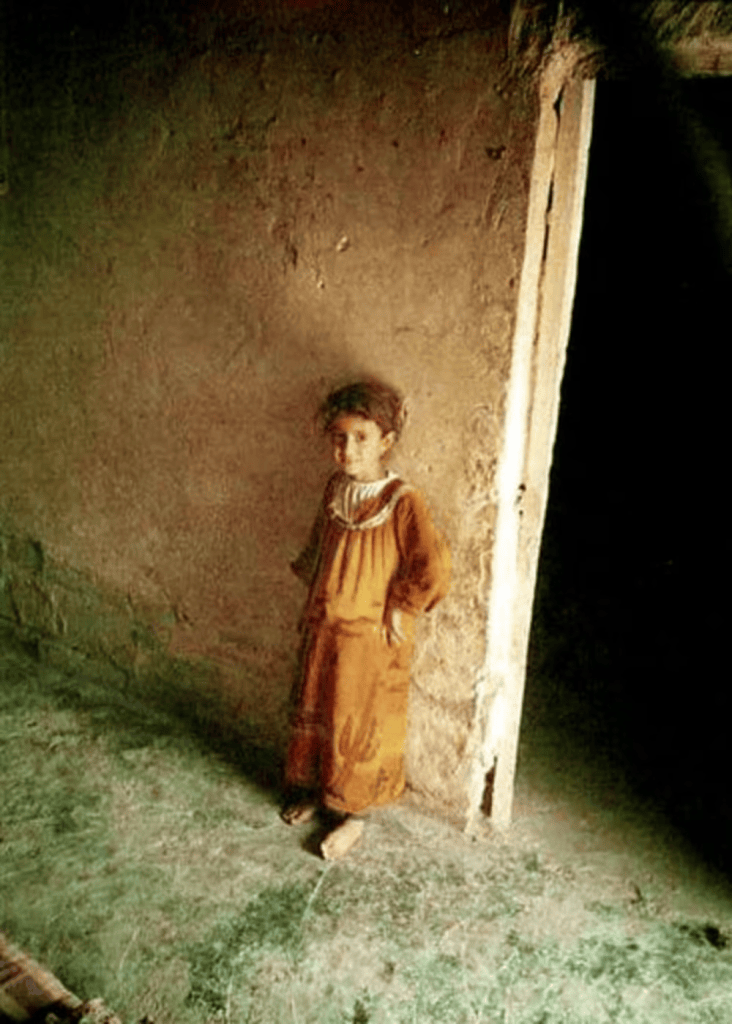
Photo of Abeer Qassim al-Janabi as a young girl
Abeer lived near a US military checkpoint, where soldiers repeatedly subjected her to unwanted sexual attention. Green, who had reportedly spoken openly about wanting to kill Iraqis, was the ringleader in the attack. The soldiers snuck into the family’s home, murdered Abeer’s parents and younger sister, raped and killed Abeer, and then burned Abeer’s body, likely in an attempt to destroy the evidence. Abeer’s two brothers returned home later to find the carnage the soldiers left behind, their lives destroyed in an instant.
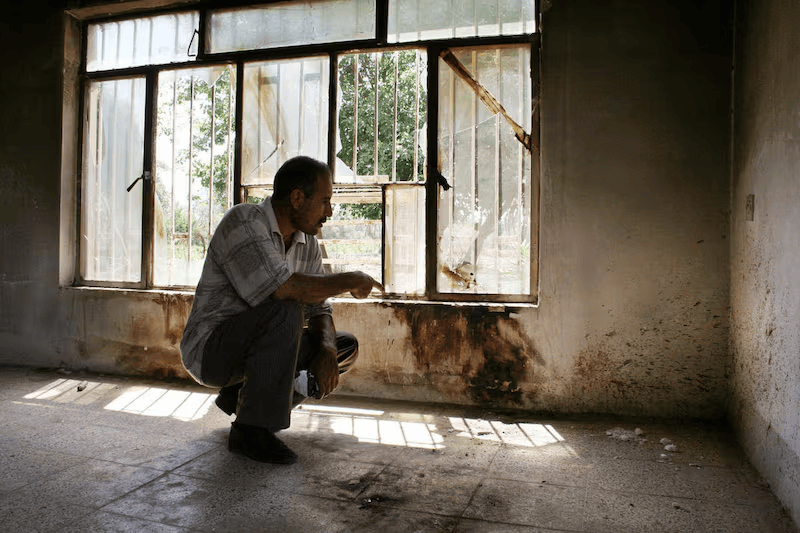
Inside the al-Janabi home after the massacre
This atrocity occurred three years into the US invasion and occupation of Iraq. The soldiers initially escaped accountability as the rape and killings were blamed on Iraqi insurgents, and only months later did the truth emerge. Four of the soldiers were ultimately convicted, while a fifth, Private First Class Bryan L. Howard, was convicted for his role in the conspiracy and cover-up.
Abeer’s case demonstrates how sexual violence can become a weapon of terror, domination, and dehumanization against women and girls in US wars. During Green’s sentencing, a relative of Abeer’s murdered family confronted him in court: “Abeer will follow you and chase you in your nightmares. May God damn you.”
Abeer and her family were not casualties of combat. They were civilians deliberately targeted and murdered by soldiers of an occupying military force and as part of a broader history of violence against women during war and military occupation.
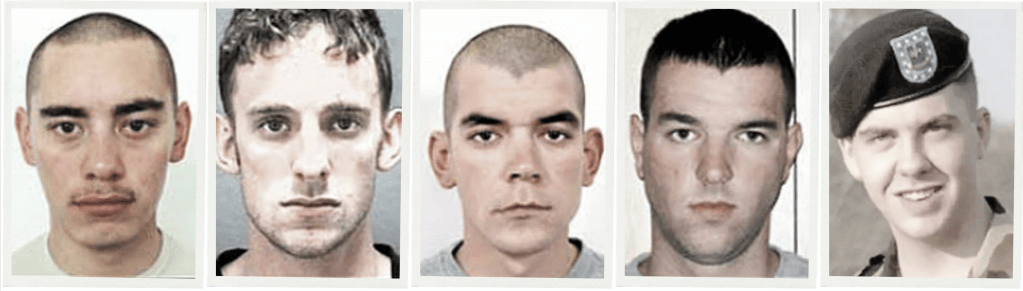
James P. Barker, Steven Dale Green, Paul E. Cortez, Jesse V. Spielman, Bryan L. Howard
Violence against women has long gone hand in hand with US military invasion and intervention. From the Philippines to Japan, from Vietnam to Colombia, and from South Korea to Iraq, the presence of US military forces has repeatedly exposed women and girls to sexual violence, exploitation, and abuse. These are not isolated incidents, but part of a documented history of violence that is brought on through US imperialism.
During the Vietnam War, the My Lai Massacre was a case where US soldiers raped Vietnamese women and girls (some as young as 10) before indiscriminately slaughtering hundreds of civilians.
In the Philippines, sprawling prostitution industries developed around US military installations, particularly Subic Bay and Clark Air Base, where thousands of women were drawn into an exploitative economy built around servicing American troops. In Okinawa, Japan, the 1995 kidnapping and gang rape of a 12-year-old girl by three US servicemen sparked massive protests against the American military presence. In Colombia, US military personnel and contractors have faced allegations of sexually assaulting women and children, including a 2007 case involving a 12-year-old girl whose accused attackers left the country under diplomatic immunity.
Regardless of the time or place, women living under the shadow of the US military are subjected to violence and exploitation. This violence is enabled not only by a military culture that emphasizes masculinity, violence, and domination, but also through legal structures that can shield rapists and abusers from accountability. Status of Forces Agreements (SOFAs), which govern the legal status of American military personnel stationed abroad, frequently grant the United States significant jurisdictional privileges over its troops, limiting or complicating the ability of host countries to investigate and prosecute crimes.
In Japan, for example, the US-Japan SOFA initially allowed American authorities to retain custody of the servicemen accused in the 1995 Okinawa rape until they were formally indicted, provoking public outrage and demands for reform. These agreements differ across countries and do not universally prevent local prosecution, but they establish unequal systems of legal authority in which the rights of foreign military personnel can take precedence over the demands of local communities for justice. The result is a system in which US military power extends beyond the battlefield and into the lives of the women and girls living under the boot of the US empire. Sexual violence is not simply an unfortunate consequence of war and occupation; it is a recurring expression of US imperialism.
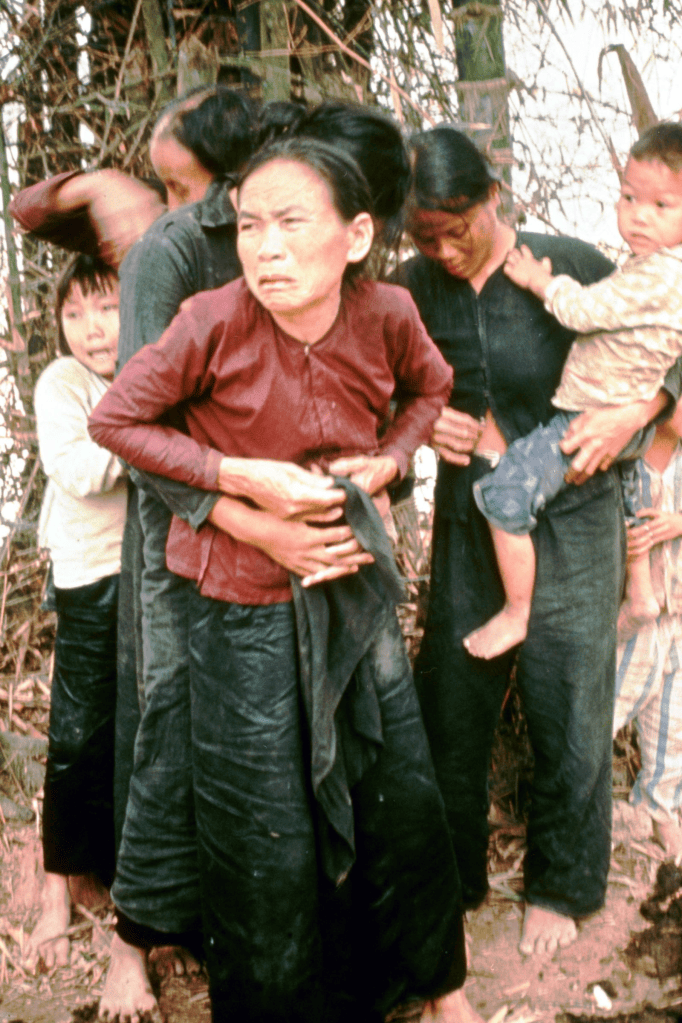
My Lai Massacre
The sexual violence which is baked into the very fabric of the US military is not only directed externally; it festers within the very ranks of the US war machine. Women who have pledged their service to the US military, whether because they just need money for college, or as a way to express their constancy to the US empire, are constantly subject to sexual harassment, assault, and rape at the hands of their fellow soldiers. We’ll show the staggering scale of the sexual crimes that take place on US military bases around the world, but first we’ll illustrate the particular horrors that women within the military endure every day, with the horrific case of Mayra Diaz.
On July 15, 2022, Mayra Diaz heard a knock at the door to her barracks in Fort Hood, Texas. When she looked through the peephole and saw a sergeant she didn’t recognize, she likely thought nothing of it. Room searches are routine in the military, so she opened the door. At that moment, the man, Sergeant Greville Clarke, revealed his handgun and forced himself into her room. He tied her hands above her head with paracord, blindfolded her, and then brutally raped her. This, however, was not enough for him, and he went on to tie her to her bed and waterboard her before wrapping the cord around her neck and attempting to strangle her to death. Unbelievably, she survived, and for 36 hours she languished, barely conscious, before she was discovered by her friends and rescued. Clarke had raped three other women prior to this attack, and was able to rape another woman before he was apprehended.
While this case is particularly brutal, it is not unique. Within the ranks of the US military is a culture of rape, plain and simple: statistics suggest that as many as 33% of women in the military experience sexual trauma; that military recruits are twice as likely as the civilian population to already be rapists; that only around 25% of assaults are reported, and only around 25% of these reports are ever acted on; that around half of the women who make these reports experience some form of retaliation.
According to a study by RAND, 51% of women who reported their assault to their commanding officer faced ostracism, 34% faced maltreatment, and 23% faced professional reprisal. The following, from the same study by RAND, of male Navy veterans, illustrates a grim picture of the problem: “Overall, 13 percent of recruits self-reported that they had attempted or completed a rape by the end of their first year of service, and, of those who sexually assaulted someone in their first year of service, 71 percent re-perpetrated during the second year of service.” Take note of the words “self-reported;” for every rapist willing to admit to his actions, how many will take his actions to the grave?
Women who have been assaulted on military bases cannot escape the perpetrator(s), and may have to work with them every day; the perpetrator may very well be a member of their unit, or even their commanding officer. Per a study by the VA: “Military values can also affect survivors’ own reactions to what they have experienced, in that victimization is strongly at odds with military ideals of strength and self-sufficiency. This dissonance can lead to intense feelings of shame and self-blame, along with identity struggles.” Victims may fear degrading the camaraderie among their unit, but equally, that same camaraderie among soldiers often leads to retaliation against victims of sexual assault.
Even with the creation of programs like the Sexual Assault Prevention and Response Office (SAPRO), structural changes in the military such as no longer giving unit commanders direct control over rape cases in their unit, and the recent establishment of the Integrated Primary Prevention Workforce (IPPW), the problem remains incredibly obstinate. The problems with these programs are numerous, as they focus on things like establishing a buddy system, reducing “risk factors” (in other words: victim blaming), putting up posters, and running bland, bureaucratic presentations which are utterly unequipped to address the actual root of the issue.
Take young men, born into a deeply patriarchal, deeply misogynistic society, which degrades women to the status of sexual objects, put them through an intense training program designed to transform them into instinctive killers, and you have a recipe for an epidemic of sexual assault against women both within and without the ranks of the military.
The US military is a system designed to commit violence as effectively as possible; by nature, it must inculcate violence within its ranks in order to function as the enforcer of US imperial domination. The men who see these posters and attend these presentations know that the idea that the military has zero tolerance for rape is pure fiction. These are the same soldiers who routinely rape, murder, and otherwise brutalize women in places under the boot of US imperialism around the world, and there is no reason to believe this patriarchal ideology would not extend to women in the military as well. This issue lies at the core of every vile act committed by the military, and it is not one that can be resolved through reform, structural changes, or the integration of social workers.
Abeer Qassim al-Janabi, Mayra Diaz, and every other woman, without and within the ranks of the war machine, who have suffered at the hands of US soldiers deserve better than that; they deserve an end to the violence wrought by the United States, for all time. The only way to end that violence is to tear down the US war machine, to resist it at every turn, to throw a wrench into the works of empire: the only solution is revolution!
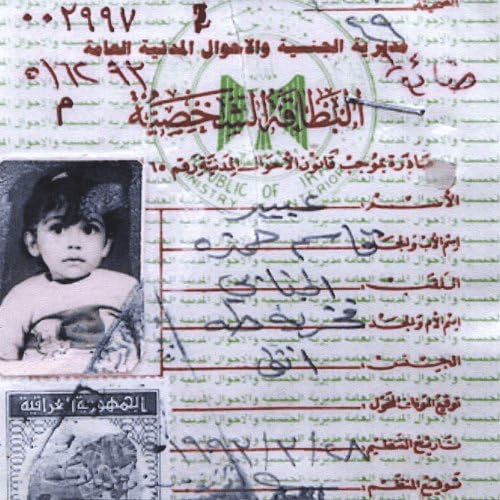
Iraqi ID card of Abeer Qassam al-Janabi

